SPECIAL EXHIBITION
Freedom Plane National Tour:
Documents That Forged a Nation
Experience 250 years in the making.
May 8 – 25, 2026
On January 20, 2026, the National Archives and Records Administration, in partnership with the National Archives Foundation, announced the Freedom Plane National Tour: Documents That Forged a Nation traveling exhibition that will bring Founding-era documents to eight American cities throughout 2026. Inspired by the 1975 Bicentennial Freedom Train, the Freedom Plane National Tour will make historic and consequential documents fundamental to America’s founding accessible across the nation to celebrate the nation’s 250th anniversary.
Open Today: 9:00 am – 5:00 pm
Plan A Visit Located in the Museum Store
See Accessibility Buy Tickets
Please Note:
Friday, May 8th, is reserved exclusively for Members. Public tickets will be available for walk-up starting on Saturday, May 9th.
This exhibition is free and open to the public. We are expecting large crowds for this once-in-a-lifetime exhibition and recommend securing tickets prior to your arrival.
Tickets are available two ways. For members and anyone who wishes to become a member, you will be able to select the time slot of your choice. Otherwise, tickets are available on a first-come, first-served basis at the HMNS Box Office. Please note that there could be a long wait or tickets may be sold out on the day you visit.
For the safety and security of our guests and collections, all bags are subject to inspection prior to entering the Freedom Plane exhibition.
Lighting in this exhibit is low in order to preserve these light-sensitive artifacts. If you have low vision, please consider using the customizable overlays in the ReBokeh app, which you can access for free while on the HMNS campus.
This exhibition is free and open to the public. We are expecting large crowds for this once-in-a-lifetime exhibition and recommend securing tickets prior to your arrival.
Tickets are available two ways. For members and anyone who wishes to become a member, you will be able to select the time slot of your choice. Otherwise, tickets are available on a first-come, first-served basis at the HMNS Box Office. Please note that there could be a long wait or tickets may be sold out on the day you visit.
For the safety and security of our guests and collections, all bags are subject to inspection prior to entering the Freedom Plane exhibition.
Lighting in this exhibit is low in order to preserve these light-sensitive artifacts. If you have low vision, please consider using the customizable overlays in the ReBokeh app, which you can access for free while on the HMNS campus.
Enhance your experience with the Freedom Plane AI Curator app. Using your mobile device, click on the button below, for your guide to the documents that shaped America.
*Curator App works best with mobile devices and no download is required.
Thank You



Featured Documents
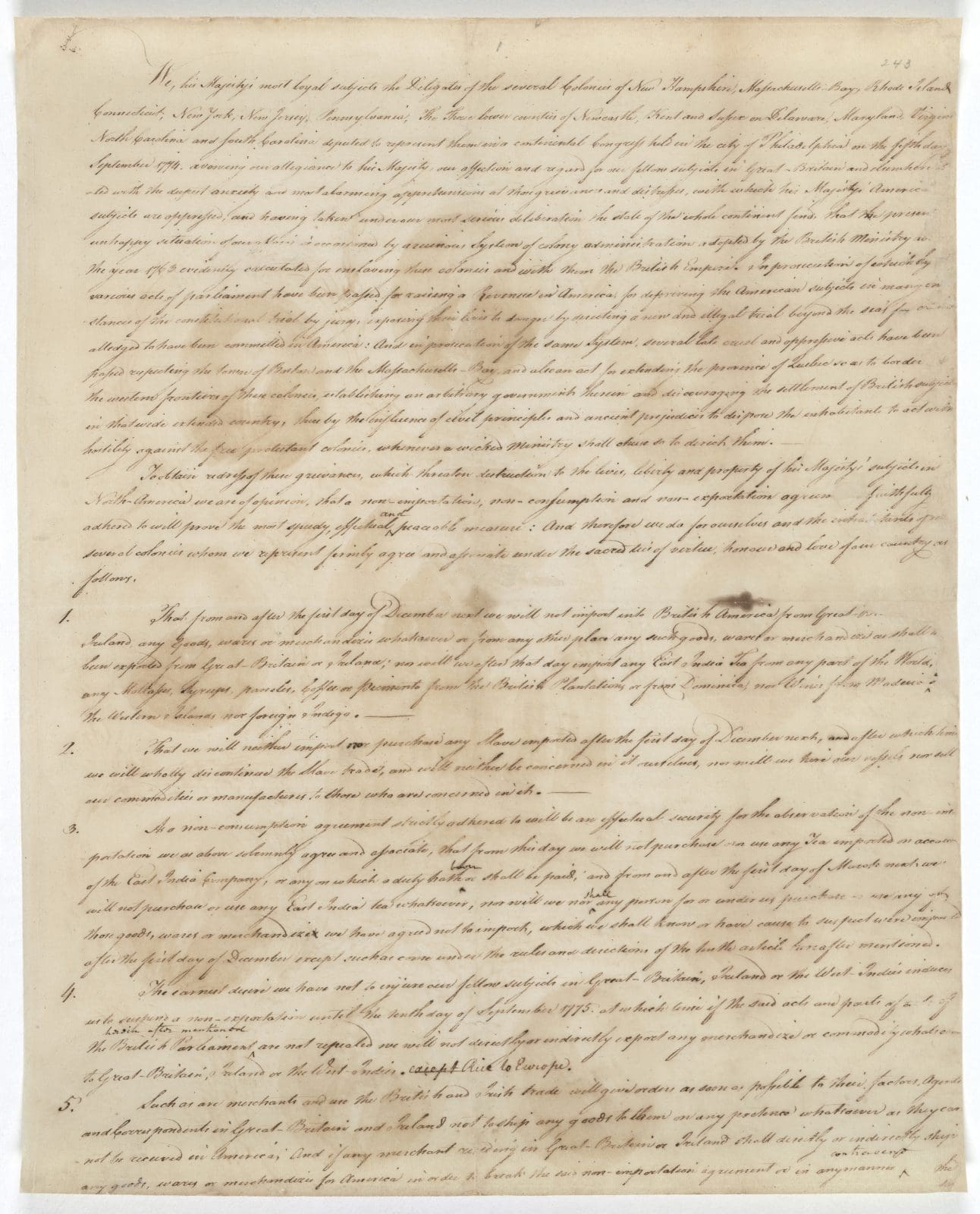
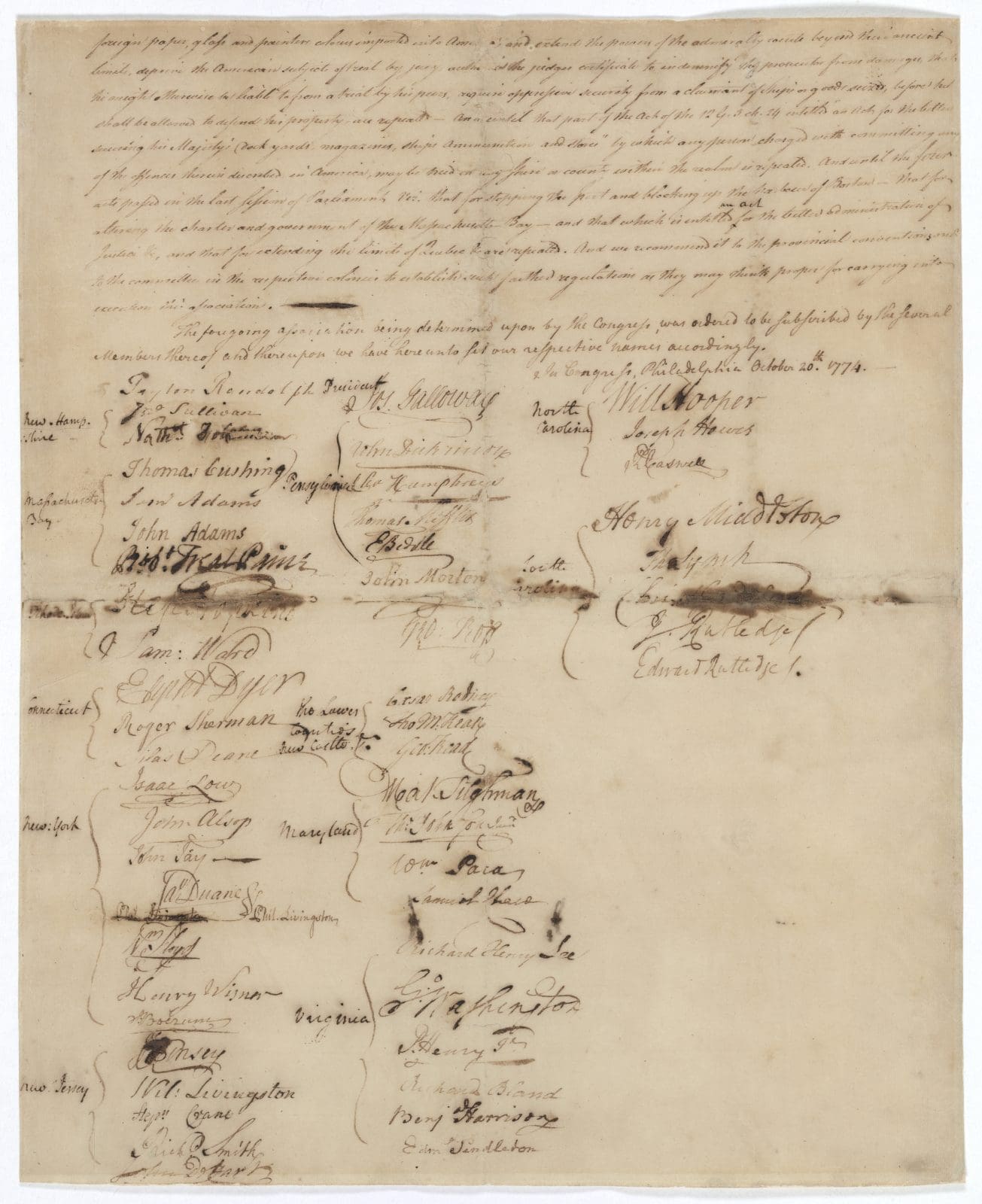
Articles of Association, 1774 - First & Last Page
- In September 1774, leaders within the American colonies formed an assembly in Philadelphia to address their grievances against Parliament collectively.
- On October 20, 1774, this First Continental Congress adopted the Articles of Association, a nonimportation, non-exportation and non-consumption agreement between the colonies that urged all colonists to boycott British goods.
- Signed by 53 delegates, the Articles of Association is the first documented instance in which the American colonies coordinated policy together.
Records of the Continental and Confederation Congresses and the Constitutional Convention, National Archives
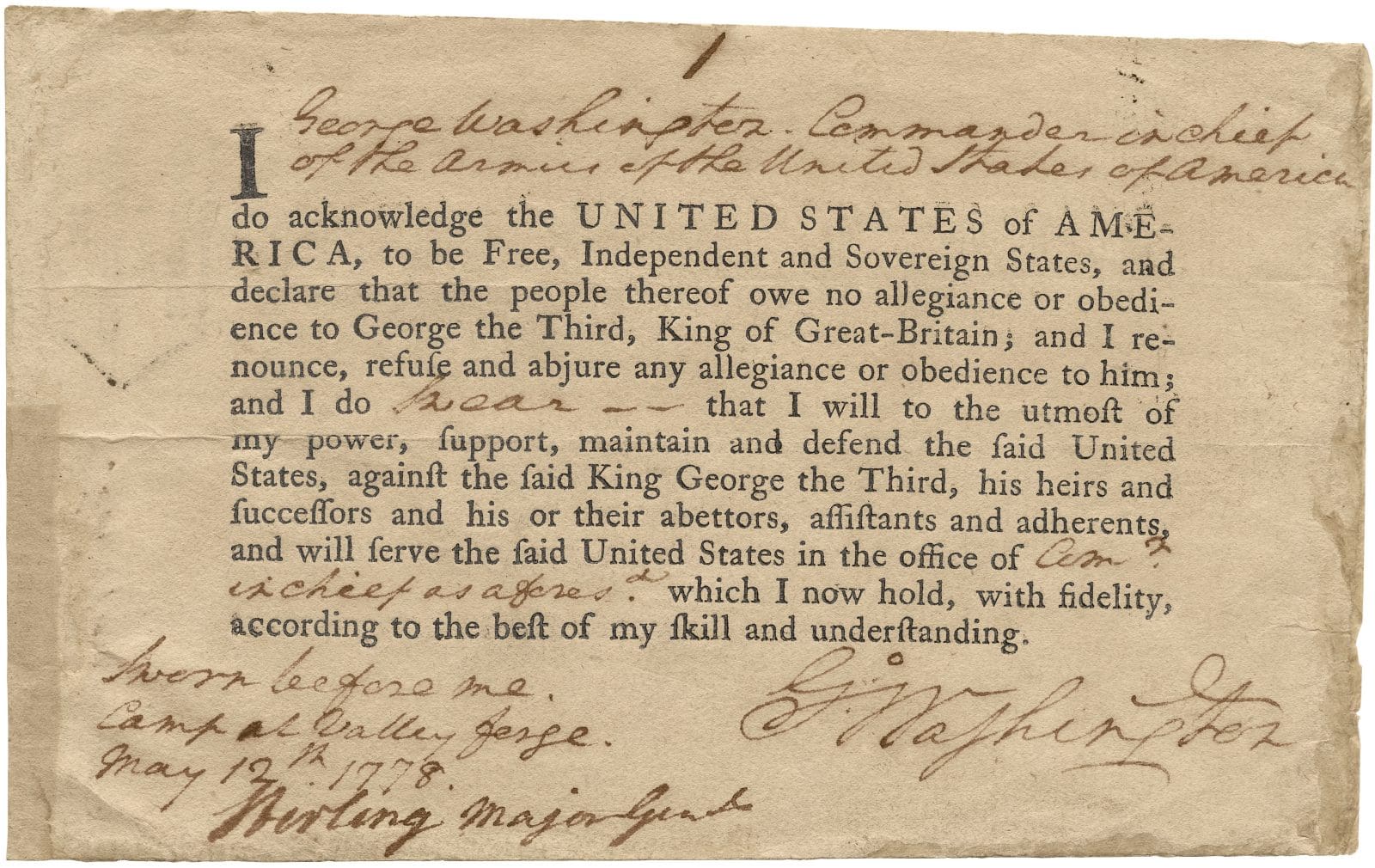
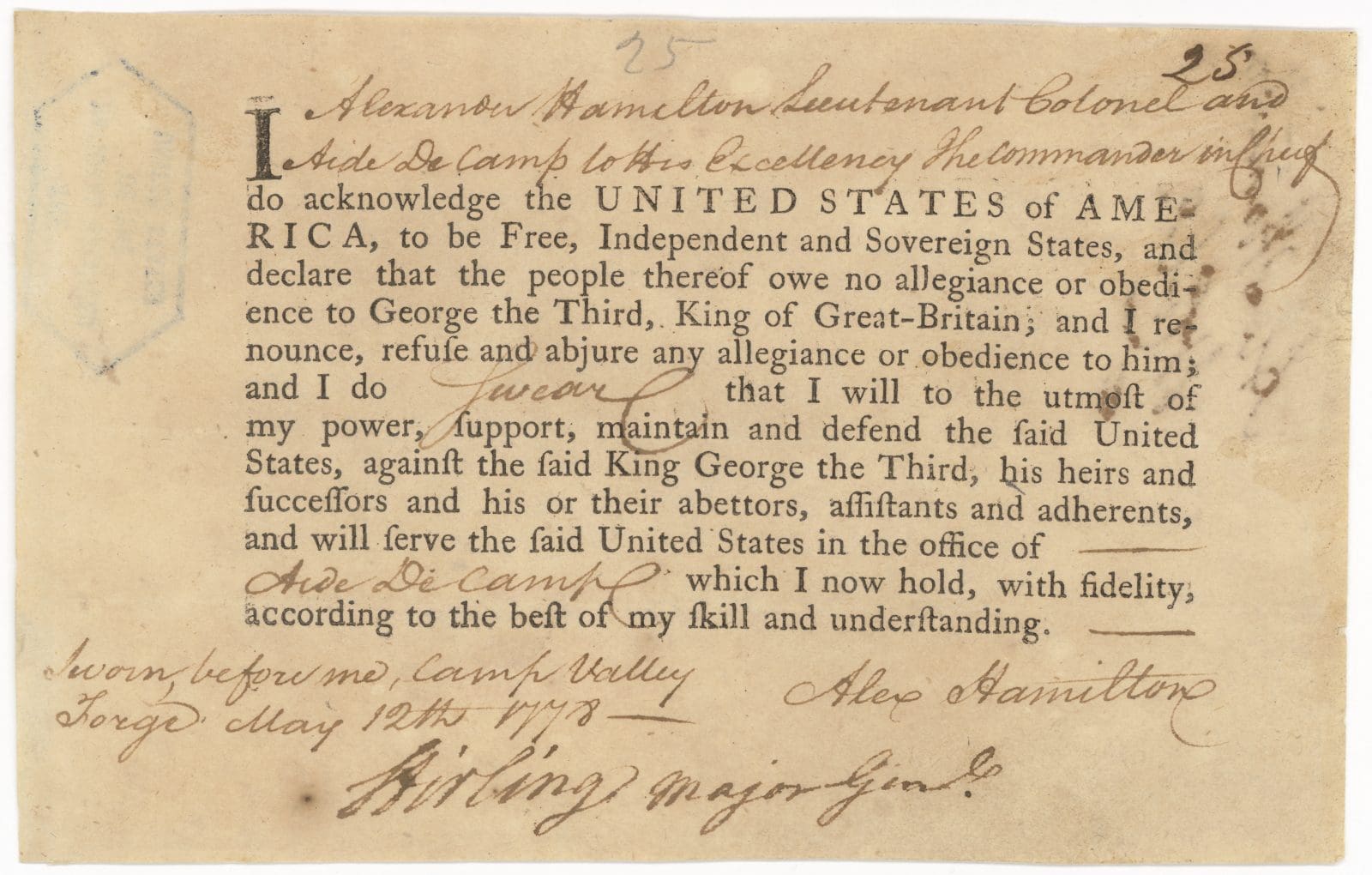
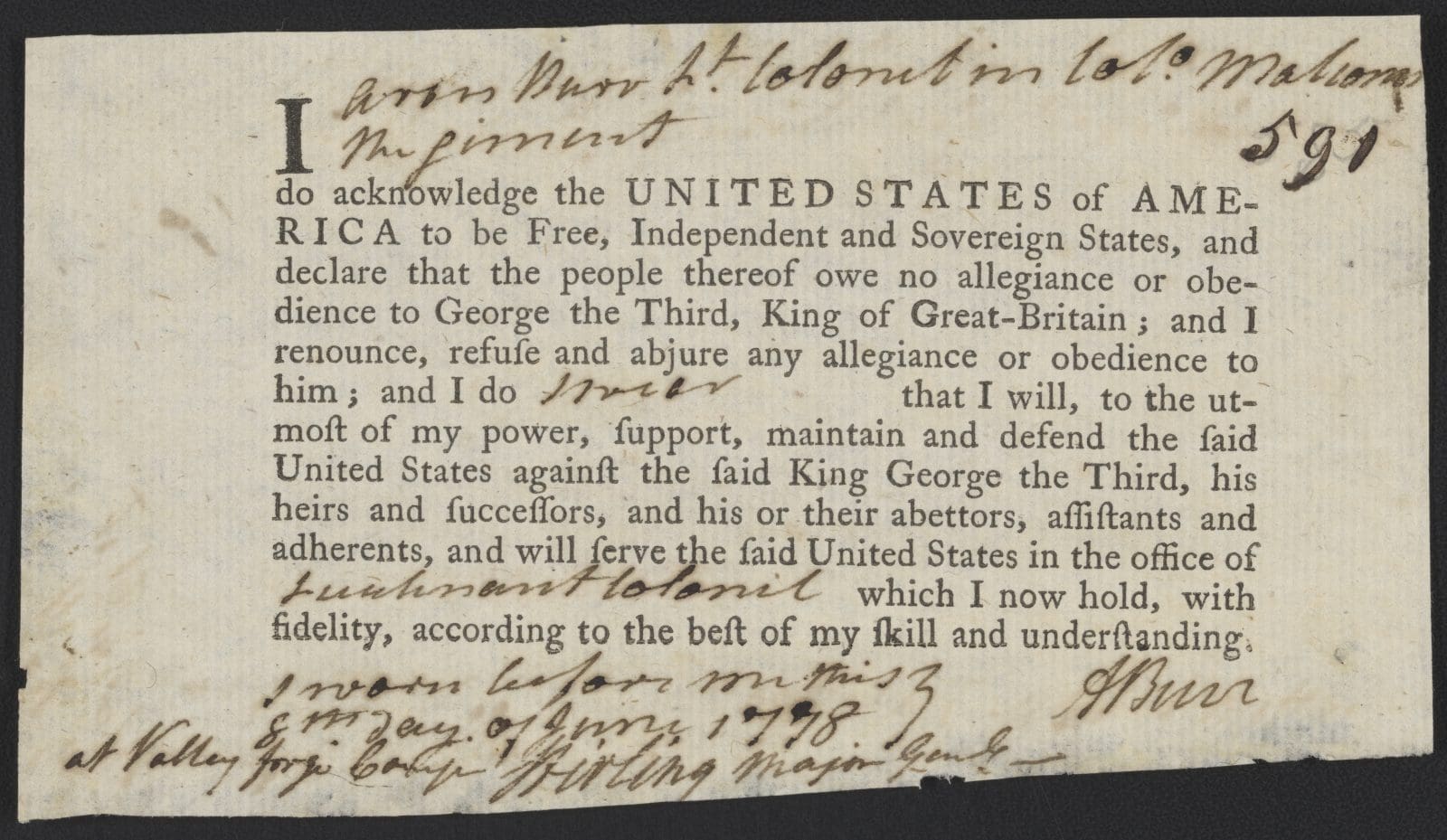
George Washington’s, Alexander Hamilton’s, and Aaron Burr’s Oaths of Allegiance, 1778
- George Washington’s troops had been encamped at Valley Forge during a particularly terrible winter in 1777 and 1778. In February 1778, Congress ordered all Continental Army officers to swear an Oath of Allegiance. Oath takers swore “the United States of America, to be Free, Independent and Sovereign States, and declare that the people thereof owe no allegiance or obedience to George the Third, King of Great Britain.”
- Oaths were then signed and witnessed. Approximately 1,200 oaths survive today in the National Archives, including these three which belong to George Washington, Alexander Hamilton, and Aaron Burr.
War Department Collection of Revolutionary War Records, National Archives
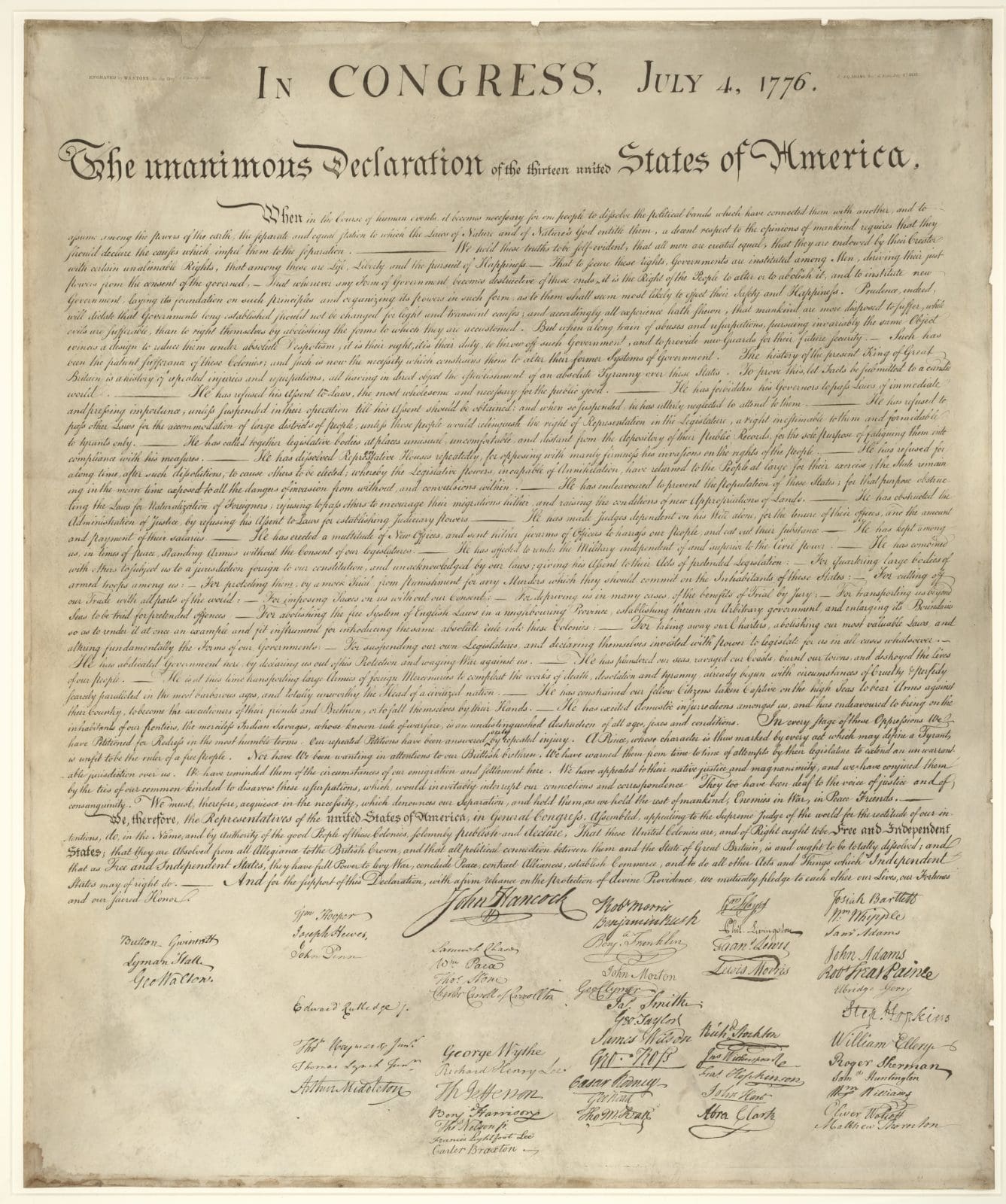
Declaration of Independence, 1823 (Original Stone Engraving)
- The Second Continental Congress met in May 1775. Armed conflict between British regulars and American rebels had already occurred at Lexington and Concord in Massachusetts, and Congress appointed George Washington of Virginia as Commander in Chief of the Continental Army to coordinate a unified American war effort.
- In a final attempt to prevent all-out war, Congress communicated its grievances directly to King George III, but the King declared the colonies in a state of rebellion. As the months wore on, public opinion in the colonies shifted all the more toward independence.
- On July 2, 1776, Congress adopted a resolution declaring independence from Great Britain. The Declaration of Independence was issued on July 4th and circulated in newspapers. Washington had it read aloud to his troops.
- In 1820, Secretary of State John Quincy Adams commissioned engraver William J. Stone to make an exact replica of the Declaration of Independence. Approximately 200 copies were produced in 1823; fewer than 50 are known to exist today, including this one.
On loan from David M. Rubenstein
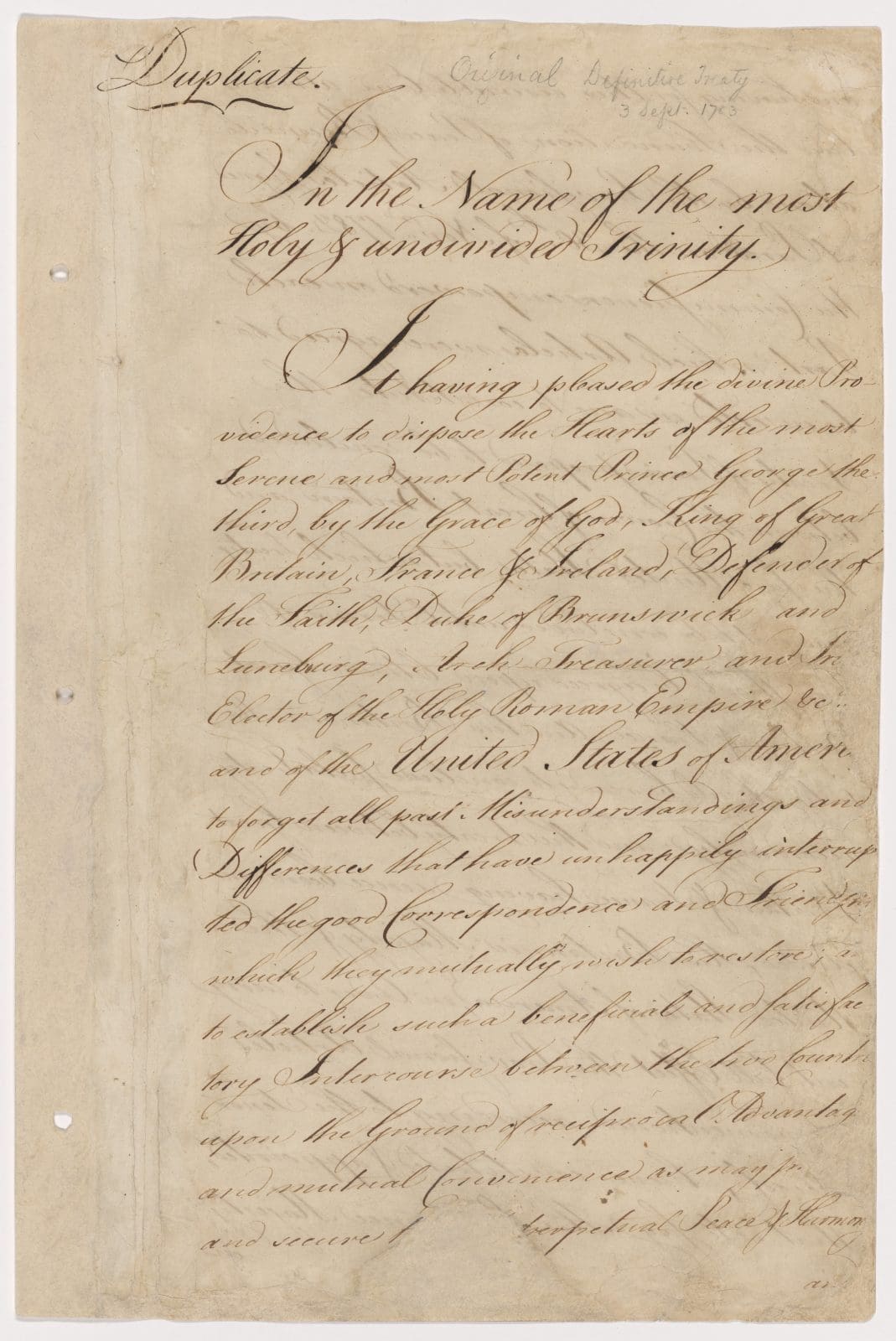
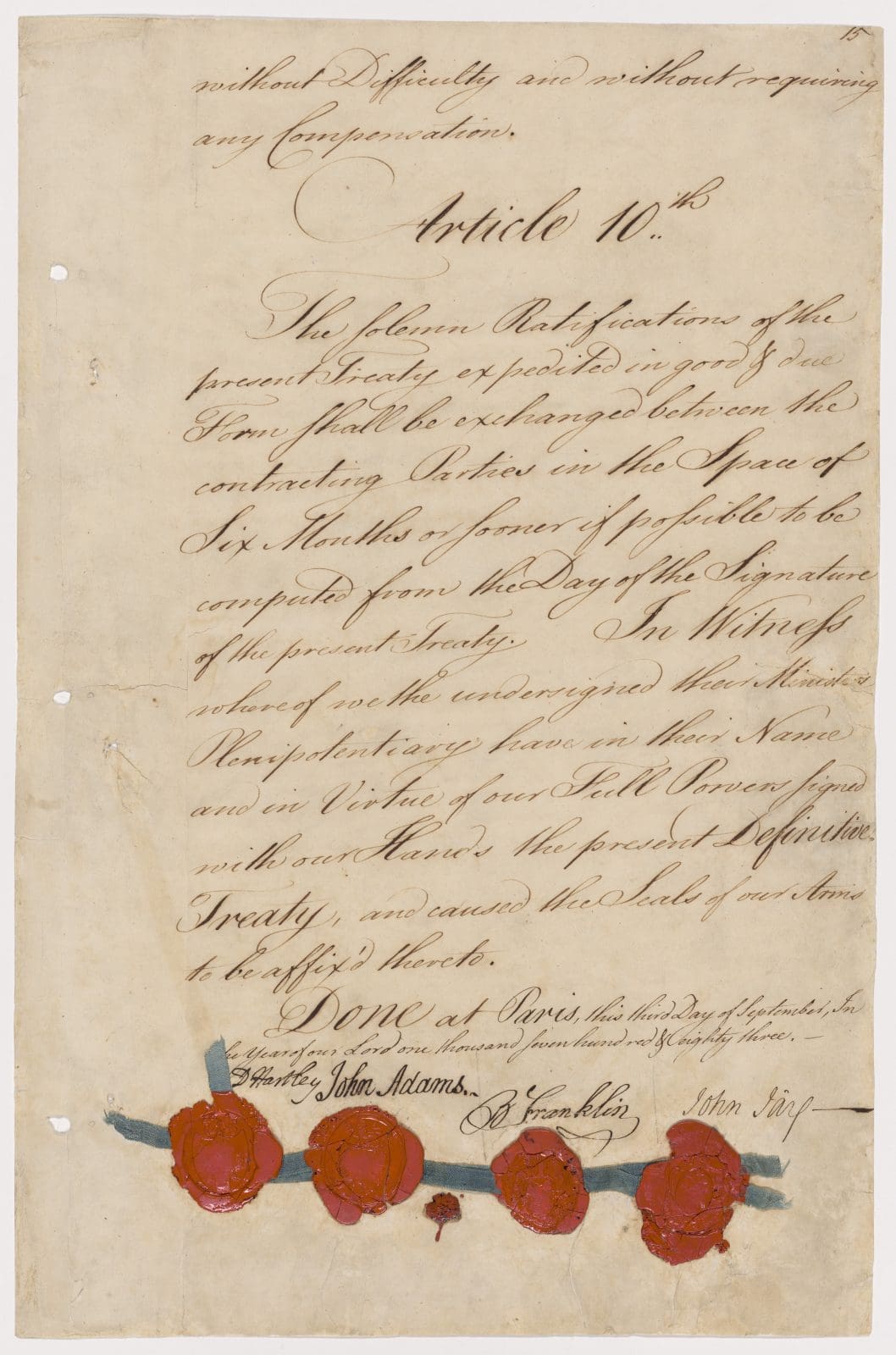
Treaty of Paris, 1783 - First & Last Page
- After eight long years of war, the Treaty of Paris was signed on September 3, 1783, between the United States and Great Britain. The Treaty formally recognized the United States as an independent nation. John Adams, Benjamin Franklin, and John Jay negotiated with Great Britain on behalf of the United States and achieved British recognition of U.S. independence and the delineation of land boundaries that would allow for America’s westward expansion. The last page of the Treaty bears the signatures of the American negotiators, as well as that of David Hartley, who represented Great Britain.
General Records of the United States Government, National Archives
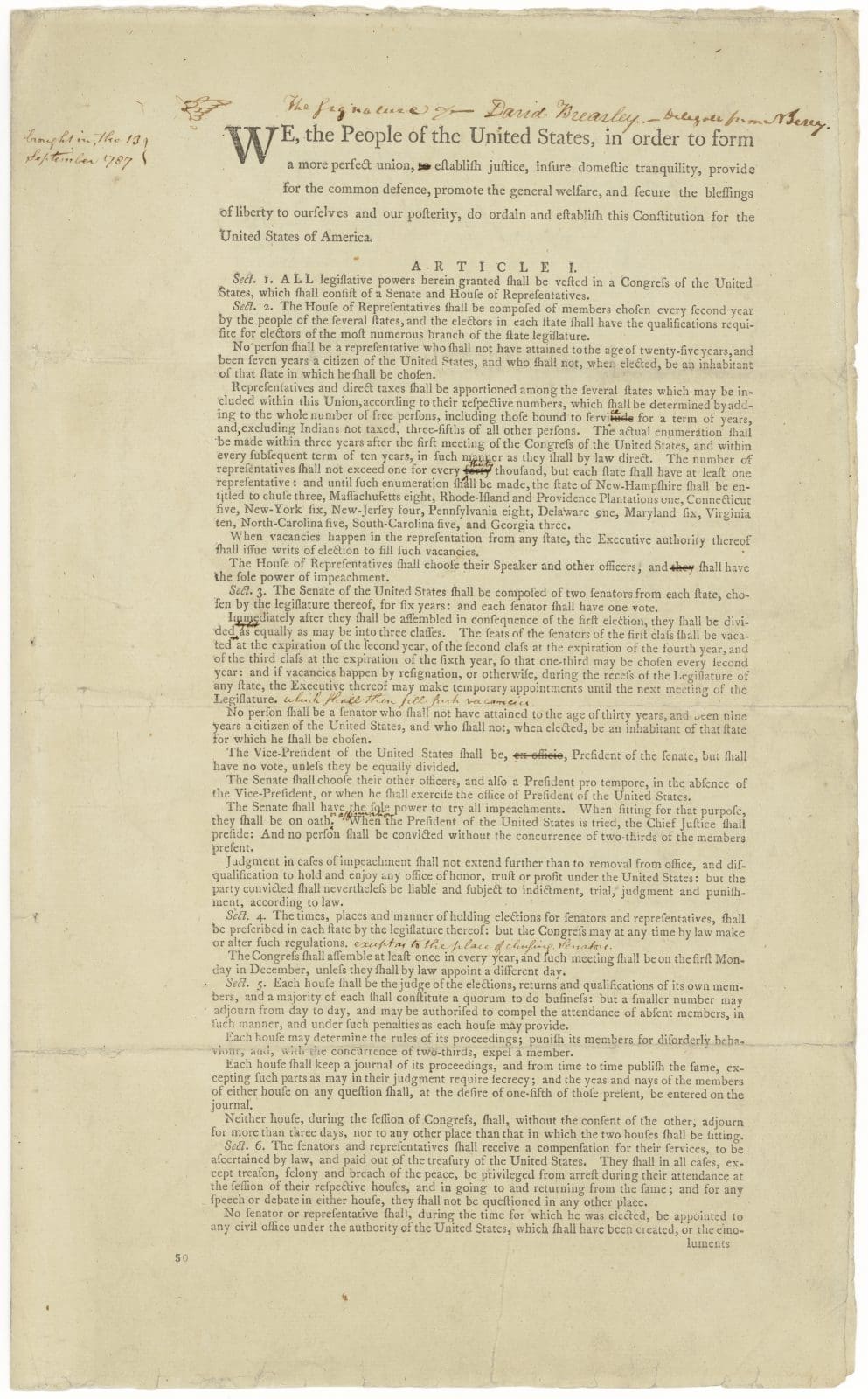
David Brearley’s Secret Printing of the Constitution, 1787 - First Page
- By 1783, the United States was free and independent. Individual states retained most governing powers under the Articles of Confederation, and concerns over its effectiveness soon became evident; a supermajority of states was required to pass most laws, and there was no method to collect taxes while the new nation badly needed to raise credit to pay off war debts.
- A Constitutional Convention was called in 1787 to address these challenges. Delegates met at Philadelphia in Independence Hall. They scrapped the Articles of Confederation and created a new system of government.
- Two printings of draft text of what would become the United States Constitution were provided to the delegates as they debated in real time. This copy belonged to New Jersey delegate David Brearley, Jr. It includes Brearley’s handwritten annotations of changes made after this document was printed.
Records of the Continental and Confederation Congresses and the Constitutional Convention, National Archives
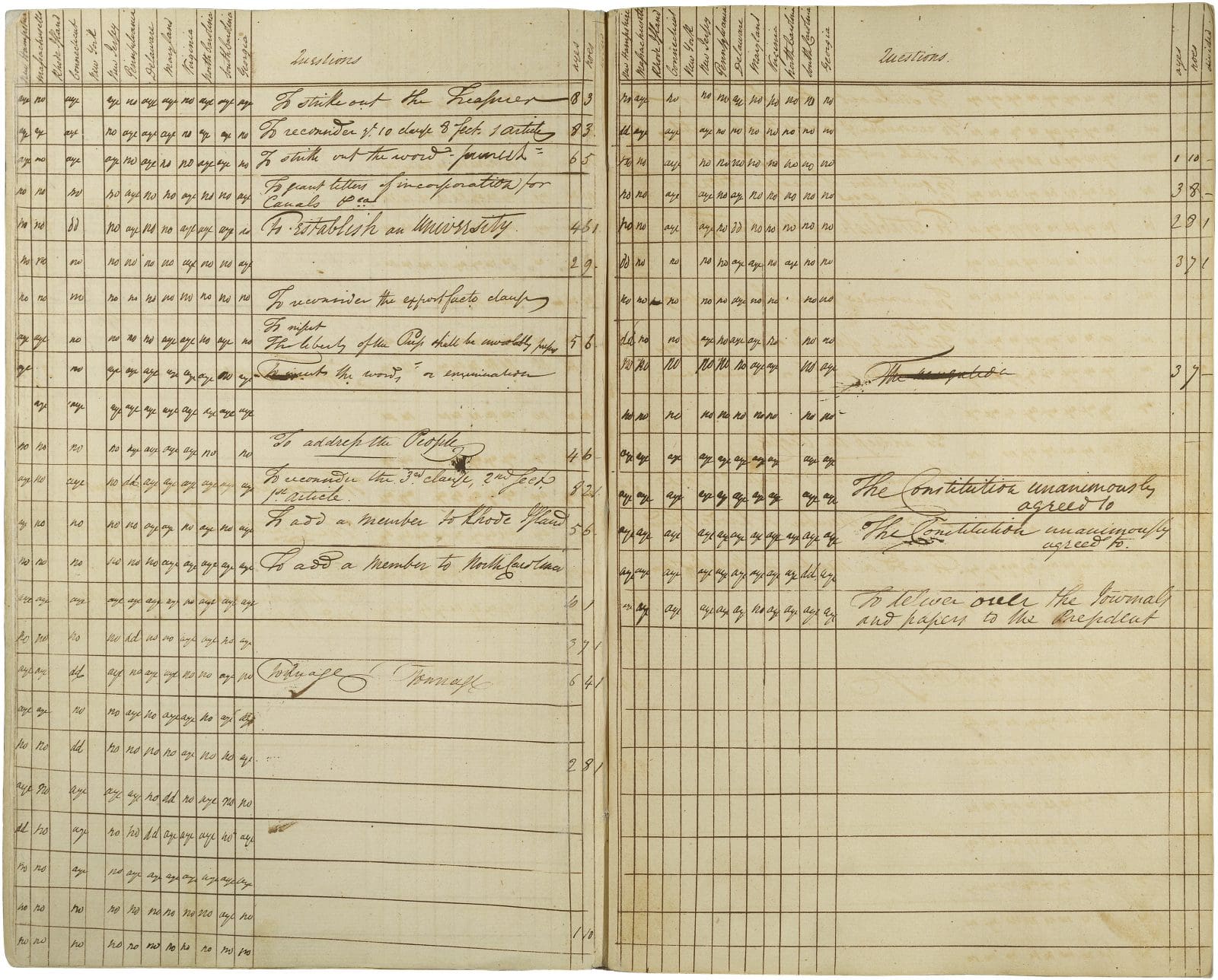
Voting Record of the Constitutional Convention, showing the final vote on the Constitution, 1787
- For four months, delegates to the Constitutional Convention discussed what the new government should look like. Their debates, arguments, and resolutions are reflected in the Convention’s voting records. This page documents the vote on the final text of what would become the Constitution. Eleven of the 13 states voted because Rhode Island did not send delegates to the Convention, and two of New York’s three delegates had already departed, thus leaving the delegation without a quorum.
Records of the Continental and Confederation Congresses and the Constitutional Convention, National Archives
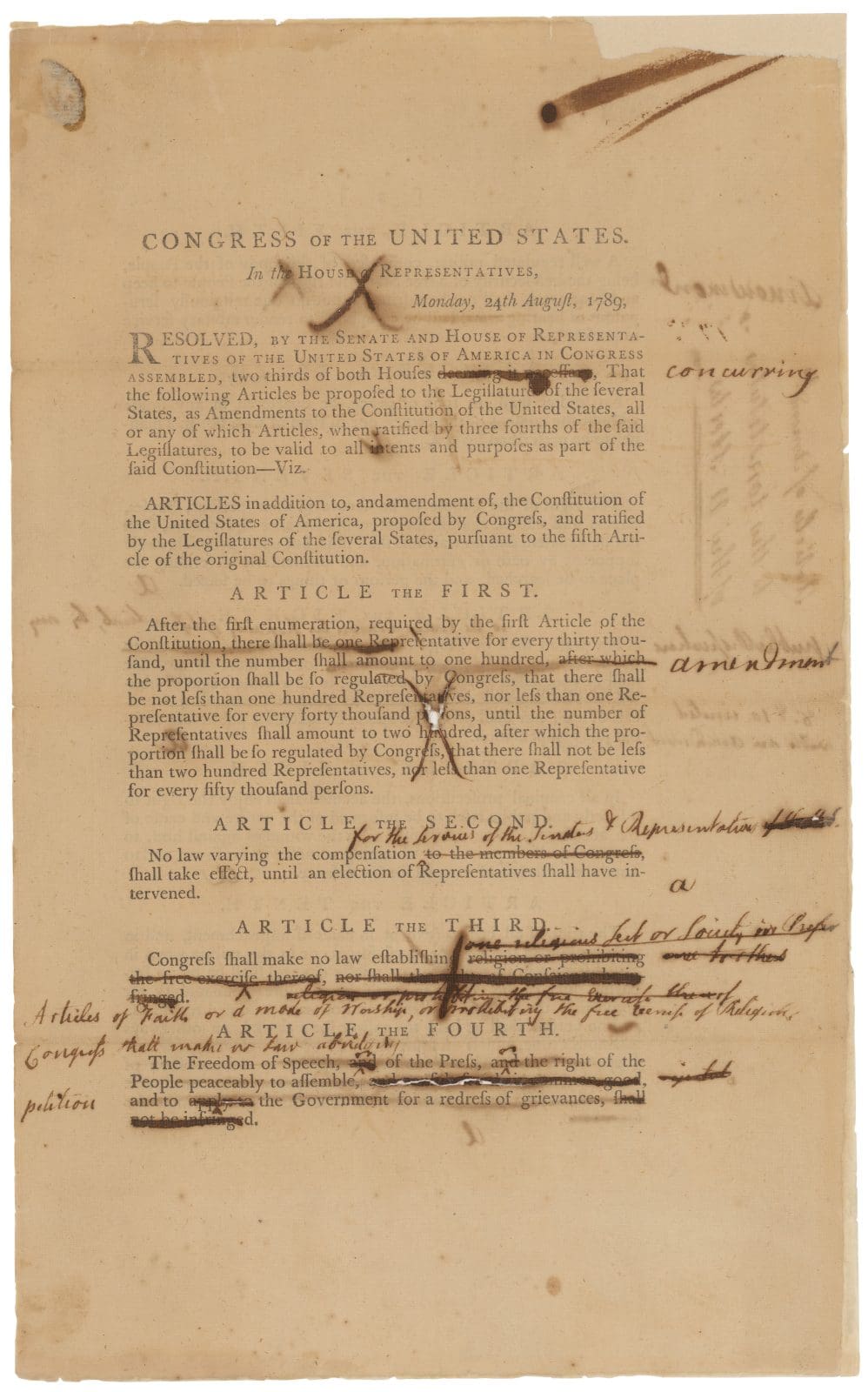
The Bill of Rights - Senate Revisions to the House-passed Amendments to the Constitution, 1789
- After the Constitution was ratified by the states and became the Supreme Law of the Land, Representative James Madison introduced a series of proposed amendments. Several states had advocated for additional protections for individual liberties.
- This is the “markup” in the U.S. Senate of what would become the Bill of Rights. On September 25, 1789, Congress passed these 12 amendments, and they were sent to the states for approval. Articles three through 12 were ratified in 1791, ensuring such basic American freedoms as the right to free speech, freedom to worship, and freedom of assembly.
Records of the United States Senate, National Archives